Windhoek Lights the Flame for Africa Cricket Ambition


FOR decades, South Africa, Zimbabwe and Namibia have lived as cricketing neighbours separated by little more than borders, yet remarkably the three had never come together on the same international stage.
Windhoek has changed that.
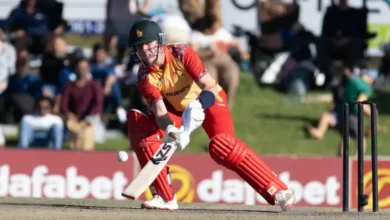
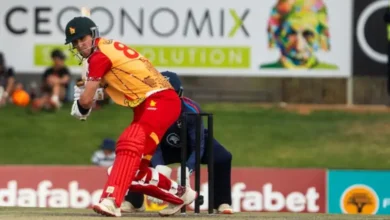
The inaugural seven match Africa T20I Tri Series was more than a collection of international fixtures. It offered a glimpse into what African cricket could become if its strongest nations combined their influence, resources and experience to build a competition capable of lifting the game across the continent.
For Africa Cricket Association president Tavengwa Mukuhlani, the tournament represents one of the most significant steps yet towards establishing a genuine continental cricket structure, with ambitions already stretching towards the creation of an Africa Cup.
“This is a great achievement on our part. First, Cricket South Africa, Zimbabwe Cricket and Namibia Cricket share borders, and it is ironic that they have never played together. This tri series shows the possibilities of what we can do if we pull our efforts in one direction,” Mukuhlani told Cricket Monthly.
“Great credit must go to Cricket South Africa for coming to the table. They are the World Test Championship holders and T20 World Cup finalists, yet they came and were part of this tri series and have gone on to give Namibia three additional ODIs.”
For Mukuhlani, the significance of Windhoek extends beyond results and trophies. Bringing together three of the continent’s leading cricket nations has provided the ACA with a product it believes can eventually become both commercially attractive and developmentally important.
“From an African continent point of view, this is the biggest step in the right direction. The three biggest nations within Africa, all from Southern Africa, have come together for this tri series,” he said.
“It sets the stage for us to properly commercialise this property and build it for the greater good of the continent.”
The long term ambition is considerably bigger than a three team tournament. Mukuhlani envisages an Africa Cup involving between five and seven nations, providing the continent with its own flagship competition and giving emerging cricket countries regular opportunities to test themselves against stronger opposition.
“This series is the foundation for Africa Cricket, both commercially and for development. We want this to grow into a tournament, maybe five to seven teams, which becomes the Africa Cup,” he said.
“With South Africa and Zimbabwe involved, and with the highest ranked Associate, Namibia, being part of it, this goes a long way for Africa Cricket.”
Mukuhlani believes the model already exists in Asia, where established cricket nations have shared the regional stage with developing teams and created opportunities for countries outside the traditional powerhouses.
“We also want the second tier countries within Africa to have their own tournament. But we can only do that once we generate decent resources from this series,” he said.
“Look at the Asia Cup, India, Pakistan, Sri Lanka, Bangladesh, Afghanistan, plus Nepal and others. See how Nepal has developed, see how Afghanistan has developed. They have benefited from the Asia Cup. We want that same benefit for all our membership within the ACA.”
That vision could eventually open more doors for countries such as Uganda, Kenya, Nigeria, Tanzania and Rwanda, allowing Africa’s emerging cricket nations to benefit from stronger competition, greater exposure and increased commercial investment.
The challenge now is transforming the enthusiasm generated in Windhoek into a sustainable product.
Mukuhlani believes broadcasting will be central to that process and expressed disappointment that SuperSport did not televise the tournament.
“We saw big crowds and competitive cricket in Windhoek, and we missed out on SuperSport. We will be engaging them, but to be quite honest, it is a shame that this tri series was not on SuperSport,” he said.
“The three biggest cricketing nations in Africa are all from Southern Africa, where SuperSport is headquartered. Every middle class household on the continent is watching sport on SuperSport. It would have gone a long way in terms of goodwill for them to broadcast these matches.
“But this is a process. Initially we were selling them a concept, now we are going to them with a reality.”
That reality, Mukuhlani believes, gives African cricket a stronger hand when approaching broadcasters and potential commercial partners. Windhoek has provided evidence that the concept can produce competitive international cricket and attract spectators.
Mukuhlani also wants corporate Africa to recognise cricket as an increasingly valuable platform rather than concentrating most of its sporting investment on football and rugby.
“We also need more of Corporate Africa to be visible in cricket. Football and rugby take the front seat on our continent,” he said.
“But consider this: Bafana Bafana have missed the FIFA World Cup several times. The Warriors have never been there, Namibia has never been there. Yet the Proteas have always been at the Cricket World Cup. Zimbabwe has missed a few editions but has always returned. Namibia has been there. Nigeria, Tanzania and Rwanda have also been there.”
He believes cricket’s international reach, coupled with Africa’s youthful population and the sport’s increasing connection with digital technology, presents an opportunity for major African companies.
“Cricket is one of those sports where Africa participates on the world stage. With the youngest population in the world, and with the game now moving into gaming, technology and devices, companies like Liquid, MTN, Econet and Vodafone should take advantage and get involved in cricket,” Mukuhlani said.
However, the vision extends beyond sponsorship, broadcasting and international matches.
Mukuhlani wants the relationships created through competitions such as the Windhoek Tri Series to strengthen coaching, administration and player development throughout Africa.
Namibia hosting two Test playing nations during the same period was therefore significant because it provided players, coaches and administrators with direct exposure to established cricket structures.
“This is the first time an Associate member has hosted two Test nations. It shows our commitment to nurturing talent in the Associate world,” Mukuhlani said.
“South Africa, the holders of the WTC trophy, are in Namibia. Imagine the wealth of experience imparted to Namibian players and their technical staff.”
He believes similar cooperation should eventually allow promising players from emerging African cricket countries to spend time competing in stronger domestic and club structures elsewhere on the continent.
“We need mentorship for coaches and for governance structures. We need players from other African countries to come and play in our domestic and club structures, so that we improve the quality of players coming out of the rest of the continent,” he said.
The objective is effectively to create an interconnected African cricket ecosystem in which stronger countries provide opportunities and expertise to developing nations, while the growth of those countries eventually strengthens the continental game as a whole.
Crucially, there is already a desire within the ACA to ensure the Windhoek tournament does not disappear after its inaugural edition.
Mukuhlani said plans are for the competition to become an annual event, initially rotating between Namibia, Zimbabwe and South Africa, with additional African nations potentially joining in future editions.
“Our desire, which Africa Cricket has agreed on, is that this should be an annual tournament rotating between Namibia, Zimbabwe and South Africa,” he said.
“Going forward, using whatever ranking the membership agrees on, we may add two more countries in the next edition. I believe the next edition should be in Zimbabwe, and the one after that in South Africa.”
Finding permanent space on an increasingly congested international calendar will be one of the major challenges, but Mukuhlani believes the timing of the inaugural tournament could prove useful as countries work on their future programmes.
“It is good that this series has taken place now, as we are in the process of finalising our FTP. This gives Zimbabwe Cricket and Cricket South Africa an opportunity to look at available windows so this becomes a permanent feature,” he said.
“It also allows Namibia to plan ahead, so that we have a decent FTP involving the other two big countries.”
The broader continental picture is already beginning to shift beyond the men’s game.
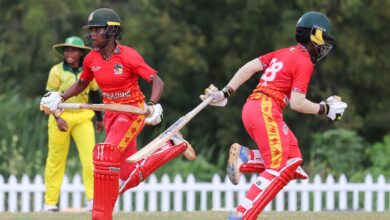
Mukuhlani pointed to the Young Lady Chevrons’ narrow four run defeat to Nigeria in Tanzania as another indication that cricket is becoming increasingly competitive across Africa.
“A loss is always painful to stomach, and we always play to win. For the Young Lady Chevrons to go all the way and lose by four runs is painful,” he said.
“But we are starting afresh to rebuild the next ladies’ team for our country. I believe the young ladies who were in Kampala are the future. You can see it in the way they play. Yes, I am disappointed that we lost, but I am positive the future is bright.”
For Mukuhlani, Nigeria’s progress is as significant to the continental project as the gathering of South Africa, Zimbabwe and Namibia in Windhoek.
“It is also good to see that there is cricket in Nigeria. The fact that Nigeria is going to the World Cup speaks to our wider objective of getting cricket into all corners of the continent,” he said.
“This team of young Lady Chevrons will go a long way in the future.”
That perhaps captures the bigger story emerging from Windhoek.
The success of the initiative will ultimately not be measured solely by how often South Africa, Zimbabwe and Namibia play each other. Its lasting value will depend on whether the commercial strength and cricketing experience of those countries can create opportunities for the rest of Africa.
There remain substantial hurdles. Broadcast partners must be secured, corporate investment attracted, international windows protected and emerging nations given meaningful pathways into stronger competition.
But something that had previously existed largely as an ambition has now been played out on a cricket field.
Three neighbours finally came together in Windhoek.