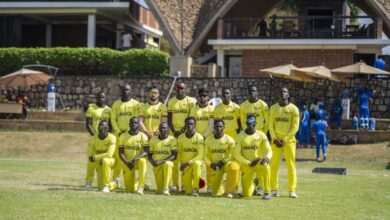
Chevrons’ Margin for Error Gone as Namibia T20I Clash Becomes Virtual Knockout


ZIMBABWE have reached the point where calculations give way to the simplest equation of all — beat Namibia this afternoon or risk watching the T20I Tri-Series final from the sidelines.
The Chevrons face the hosts at Namibia Cricket Ground knowing their campaign has been stripped of breathing space following Tuesday’s 43-run defeat to South Africa.
Zimbabwe are tied on two points at the bottom of the standings but are disadvantaged by an inferior net run rate, while South Africa lead on four points ahead of second-placed Namibia.
It makes today’s meeting a survival contest for Sikandar Raza’s men, who must first take care of Namibia before turning their attention to the final round-robin encounter between the Eagles and South Africa tomorrow.
A Zimbabwe victory followed by a South African win over Namibia would open the door for the Chevrons to meet their neighbours in Saturday’s final.
But there is little value looking that far ahead when Zimbabwe’s immediate challenge is a Namibia side they only just managed to subdue earlier in the tournament.
The Chevrons survived by five runs in that encounter after Namibia launched a furious late fightback, meaning another tight contest would hardly come as a surprise.
For Zimbabwe, however, the bigger concern heading into today’s showdown is their batting.
Against South Africa on Tuesday, the Chevrons collapsed to 51 for six and were forced to rely on captain Raza, who made 45 from 33 deliveries, before Newman Nyamhuri and debutant Kundai Matigimu added 37 for the final wicket.
Those collapses have become increasingly expensive in a format where a handful of quiet overs — or a cluster of wickets — can place a chase beyond reach.
Opening batsman Ben Curran believes freedom and conviction will be crucial if Zimbabwe are to produce the batting performance their campaign now demands.
“T20, you have to play free. You’ve got to give yourself a chance. You’ve got to trust what you’re doing in your preparation,” Curran said.
“Now I’m getting my chance in T20s. Hopefully I can keep doing what I’m doing.”
Zimbabwe can at least draw encouragement from the manner in which their bowlers fought back against South Africa.
The Proteas had threatened to surge beyond 200, but Zimbabwe claimed six wickets in the final five overs to restrict them to 185 for seven.
Wessly Madhevere was at the heart of that recovery with three wickets for 20 runs, providing one of the brighter moments from an otherwise disappointing afternoon.
Curran believes that late fightback demonstrated what Zimbabwe can achieve when their plans and execution come together.
“Today was a different story. We pulled it back in the last five overs. I think we took six wickets,” he said.
“We can take a lot of positives from that, with regards to the planning and the execution of the plan. We did really well to keep them to what we did.”
Yet Zimbabwe are attempting to balance the urgency of winning now with the longer process of constructing a side capable of competing at the 2028 T20 World Cup.
Curran acknowledged that the experimentation with personnel and combinations is part of that wider project.
“We’re building for that 2028 World Cup. There’s obviously a lot of combinations and different options we’re looking at,” he said.
“Ultimately, it’s building towards that. It’s not going to all be put together in one game. I think it’s a building phase. Hopefully, as guys gain that experience, both on and off the field, you’ll see those numbers come down.”
Today, though, the future must briefly surrender centre stage to the present.
Namibia have their own ambitions and will need little motivation after coming within five runs of Zimbabwe in their previous meeting. Playing on home soil and with a place in the final within reach, the Eagles have every reason to believe they can finish the job this time.
That leaves Zimbabwe confronting two battles at once — Namibia in front of them and the inconsistencies that have repeatedly undermined their own cricket.
The bowling fightback against South Africa offered encouragement. Raza has continued to carry responsibility in the middle order. Younger players are being exposed to international pressure as Zimbabwe search for combinations that can serve them in the longer term.
But tournament cricket can be unforgiving of development timelines.